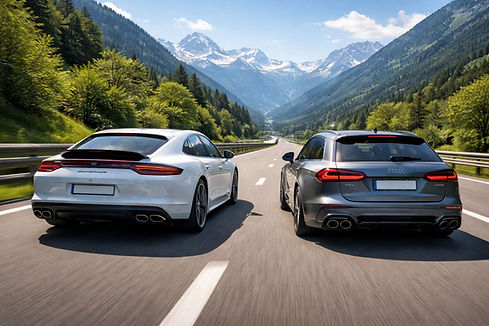
German Car Engine Guide (Audi, BMW, Mercedes, Porsche)
Which models are safest to buy used in Germany?
Buying a used German car can be a great decision if you choose the right engine, the right gearbox, and the right production years.
Many “bad deals” are not bad cars, they are simply the wrong engine generation, the wrong gearbox version, or a car with neglected service history.
This guide focuses on the most searched German brands and models.
Audi, BMW, Mercedes-Benz, and Porsche.
Important note.
There is no engine with “zero problems”.
The goal is to choose combinations with the lowest complaint rate and the best long-term ownership experience.
This text is based on common owner reports, workshop patterns, and known weak points seen across the German used-car market.
AUDI.
A3, A4, A5, A6, A7, A8, Q1, Q3, Q5, Q7, and electric models.
Audi can be an excellent buy in Germany, but Audi reliability depends heavily on engine generation.
The safest strategy is to choose newer engine families and avoid known problem generations.
Audi engines that are usually the safest choices.
2.0 TDI EA288 for long-distance drivers and high mileage usage.
2.0 TFSI EA888 Gen 3 for petrol buyers who want a modern balance of power and reliability.
1.4 TFSI EA211 and 1.5 TFSI EA211 Evo for daily driving and lower running costs.
Audi weak points you should always check.
Cooling system leaks from thermostat housing and water pump assemblies are a common pattern on many modern turbo Audis.
PCV and crankcase ventilation issues can cause oil seepage and rough running over time on some petrol engines.
Direct injection petrol engines can develop carbon buildup on intake valves and cause misfires or rough idle if neglected.
Diesel models used only for short trips can suffer from DPF clogging and EGR valve or cooler problems.
DSG gearboxes can be excellent, but the exact DSG type matters and correct servicing matters.
Haldex quattro models should have documented Haldex oil servicing to protect the AWD system.
Audi A3.
Best lower-risk generation for most buyers is A3 8V from 2013 to 2020.
Recommended low-risk engines are 1.4 TFSI EA211 for petrol buyers and 2.0 TDI EA288 for diesel buyers.
S3 8V from 2014 to 2020 can be solid if it was not tuned and has strict oil change history.
Weak points to check are water pump or thermostat leaks, PCV issues, and DSG clutch behaviour in traffic.
Be careful with older A3 8P turbo petrol versions where timing chain problems are more widely reported.
Be careful with 7-speed dry-clutch DSG in heavy stop and go use, because it is more sensitive than wet-clutch units.
Audi A4.
Best lower-risk generation for most buyers is A4 B9 from 2016 to 2020.
Recommended low-risk diesel is 2.0 TDI EA288 for motorway and long-distance use.
Recommended petrol choice is the newer 2.0 TFSI EA888 Gen 3 versions with good service proof.
Weak points to check are coolant leaks, oil seepage around the timing cover area, and smooth gearbox operation.
Be careful with older A4 B8 petrol 2.0 TFSI generations where oil consumption complaints are common online.
Always confirm correct oil change intervals and proof of major maintenance.
Audi A5.
Best lower-risk generation for most buyers is A5 B9 from 2016 to 2020.
Recommended choices are 2.0 TDI EA288 for mixed driving and 2.0 TFSI EA888 Gen 3 for petrol buyers.
Weak points to check are coolant system leaks, carbon buildup on higher mileage petrol engines, and DSG shift quality.
Be careful with older 2.0 TFSI generations if service history is weak or oil usage is unclear.
Audi A6.
Best lower-risk generation for many buyers is A6 C7 facelift from around 2015 to 2018.
Recommended choices are 2.0 TDI EA288 for lower running costs and 3.0 TDI for strong long-distance torque.
Weak points to check on 3.0 TDI are emissions components, intake system wear, and higher maintenance cost exposure.
A6 C8 from 2018 onward is modern and comfortable, but higher electronic complexity increases repair costs if neglected.
Be careful with high-option cars with missing invoices, especially with air suspension, rear-steer, and advanced driver assistance systems.
Audi A7.
A7 facelift from around 2015 to 2018 with 3.0 TDI is often chosen for long-distance comfort.
A7 from 2018 onward can be excellent, but condition and history matter more than mileage.
Weak points to check are air suspension condition, drivetrain vibration, and full servicing proof.
Be careful with “cheap” A7 listings, because one major repair can remove the purchase savings quickly.
Audi A8.
A8 is a luxury flagship and is never forgiving when maintenance was skipped.
A8 D4 facelift from around 2014 to 2017 can be a good buy only with a perfect history file.
A8 D5 from 2017 onward is very comfortable but extremely complex, so the best examples are worth paying for.
Weak points to check are air suspension health, cooling system stability, and electronic feature reliability.
Be careful with bargain A8 cars, because repair costs are usually high.
Audi Q1.
Q1 from 2016 onward with 1.4 TFSI or 1.5 TFSI is often a good practical daily choice.
Diesel Q1 can be fine for regular long trips, but avoid diesel for pure city driving.
Weak points to check are DSG behaviour and cooling system leaks.
Be careful with short-trip diesel usage that accelerates DPF and EGR wear.
Audi Q3.
Q3 from around 2015 to 2018 with 2.0 TDI is commonly chosen for reliability and daily practicality.
Q3 from 2018 onward can be a good buy with 1.5 petrol or 2.0 diesel depending on your driving profile.
Weak points to check are DSG smoothness, suspension wear, and evidence of correct servicing.
Be careful with older petrol versions without full maintenance proof.
Audi Q5.
Q5 FY from 2017 to 2021 with 2.0 TDI is often a low-risk family and long-distance SUV setup.
Petrol versions can be good, but you must check exact engine generation and service proof.
Weak points to check are cooling leaks, DSG servicing evidence, and quattro system maintenance.
Be careful with older Q5 petrol versions that have an oil consumption reputation online.
Audi Q7.
Q7 from 2015 onward with 3.0 TDI is a strong long-distance and towing setup when maintained properly.
Weak points to check are air suspension wear, brake wear costs, and emissions system health.
Be careful with high-mileage Q7 cars with many options and weak invoice history.
A cheap Q7 is rarely a cheap ownership experience.
Audi electric models.
Audi Q4 e-tron can deliver up to roughly 530 km WLTP range depending on version and wheels.
Audi e-tron 55 quattro is typically around 370 to 440 km WLTP depending on test rating and version.
Audi Q8 e-tron generally improves range compared to the older e-tron but still depends strongly on wheels and motorway speed.
Audi e-tron GT shares technology with the Porsche Taycan and should always be checked for recall status and battery monitoring updates.
Weak points to check on used Audi EVs are software stability, charging behaviour, recall status, and thermal management history.
Always test fast charging, heating performance in winter, and real consumption on a test drive.
Always check the high-voltage battery warranty status and whether all campaign updates were completed.
BMW.
1 Series, 2 Series, 3 Series, 4 Series, 5 Series, X1, X3, X5, X7, and electric models.
BMW can be an excellent used buy in Germany if you pick the right engine family.
The biggest mistakes are buying older diesel engines with timing chain reputations, or buying early petrol turbo generations with known timing chain guide concerns.
BMW engines that are usually the safest choices.
B48 petrol 2.0 turbo in many models after the mid-2010s.
B58 petrol 3.0 inline six, widely praised for strength and durability.
B47 diesel 2.0, generally preferred over older N47 diesel.
B57 diesel 3.0, commonly considered a strong long-distance diesel engine.
BMW weak points you should always check.
Coolant leaks from plastic cooling parts and vent lines are a common topic on B48 and B58 ownership.
Oil leaks from valve cover gaskets and oil filter housing areas are common patterns as mileage increases.
Charge pipes and boost hoses can crack on turbo models and cause power loss.
ZF 8-speed automatics are usually durable, but they still benefit from documented servicing for long-term smoothness.
Diesel models must be checked for EGR cooler recall work and overall emissions health.
xDrive models should be checked for drivetrain vibration and transfer case servicing history.
BMW 1 Series.
Best lower-risk choice is F20 and F21 from around 2015 to 2019.
Safer diesel choice is the newer diesel family rather than earlier timing-chain problem era diesels.
Petrol 118i and 120i can be good choices when service history is complete and coolant leaks are not present.
Weak points to check are coolant loss, oil seepage, and suspension wear on sporty setups.
Be careful with early diesel years if timing chain history is unknown.
BMW 2 Series.
218i can be a sensible low-cost choice when maintained correctly.
220i and 230i with newer petrol families are often strong all-rounders.
220d with newer diesel family is a solid long-distance choice.
Weak points to check are cooling system stability and smooth gearbox behaviour.
Be careful with early production turbo petrol examples if timing chain service is unknown.
BMW 3 Series.
Best lower-risk choices are later generation 320d and 330d with newer diesel family for motorway use.
330i with B48 is a balanced petrol choice for mixed driving.
340i with B58 is one of the strongest modern BMW petrol setups.
Weak points to check are coolant leaks, oil filter housing leaks, and PCV or valve cover seepage.
Be careful with older 320d from the early N47 era where timing chain risk is widely discussed online.
Be careful with neglected company cars that have long oil change intervals and weak documentation.
BMW 4 Series.
Recommended lower-risk choices mirror the 3 Series engine families.
420d and 430d newer diesel generations can be strong long-distance coupes.
430i with B48 and 440i with B58 are widely seen as strong petrol options.
Weak points to check are coolant leaks, oil leaks, and evidence of careful ownership.
Be careful because coupes are often driven harder than standard sedans.
BMW 5 Series.
G30 from 2017 onward is usually the safest modern used generation.
520d and 530d with newer diesel families are strong motorway cars with good economy.
530i with B48 is a solid petrol choice, and 540i with B58 is a strong premium option.
Weak points to check are cooling system leaks and the condition of expensive suspension components.
Be careful with high-mileage executive cars that have many options but weak invoice history.
BMW X1.
F48 from 2015 onward is a good practical choice.
B38 petrol is good for lighter city and mixed usage.
B47 diesel is strong for motorway usage and regular longer trips.
Weak points to check are drivetrain wear, suspension wear, and diesel emissions health.
Be careful with diesel SUVs that lived mostly in city traffic.
BMW X3.
G01 from 2017 onward is a strong used SUV generation.
20d newer diesel family is a common low-risk family choice for long distance use.
30i with B48 is a good petrol alternative for mixed driving.
M40i with B58 is often considered a very strong performance setup when maintained.
Weak points to check are cooling leaks, oil seepage, and drivetrain vibration under load.
Be careful with cheap high-mileage SUVs without proof of maintenance.
BMW X5.
G05 from 2018 onward with 40i B58 is often one of the safest modern X5 setups.
Diesels can be strong long-distance cars, but they must have clean emissions history.
Weak points to check are cooling system health, air suspension wear if equipped, and the cost history of repairs.
Be careful with neglected luxury SUVs because repair costs rise quickly.
BMW X7.
G07 from 2019 onward with 40i B58 is often the safest big-SUV petrol setup.
Diesel can be excellent for motorway use, but it is not ideal for constant short trips.
Weak points to check are air suspension health, brakes, and drivetrain service proof.
Be careful with bargain X7 listings because ownership costs are rarely bargain-level.
BMW electric models.
BMW i3 is widely known for strong real-world battery longevity when maintained normally.
BMW i4 has strong range potential, with roughly 490 to 590 km WLTP depending on version and wheels.
BMW iX3 is a practical SUV EV, but motorway range will drop with high speed and winter temperatures.
BMW iX, i5, and i7 offer higher comfort but are heavier, so consumption and tyre costs matter more.
Weak points to check on BMW EVs are software stability, 12V battery health, and charging performance.
Always test DC fast charging, heating, and real consumption during a test drive.
Always confirm recall status and software update history.
MERCEDES-BENZ.
A-Class, B-Class, C-Class, E-Class, G-Class, V-Class, and electric models.
Mercedes can be an excellent used buy in Germany when you choose the correct engine and buy a well-maintained example.
Mercedes reliability is strongly linked to service history, correct oil intervals, and the way the car was used.
Mercedes engines that are usually the safest choices.
OM651 diesel 2.1 has many high-mileage success stories when maintained properly.
OM654 diesel 2.0 is modern and efficient but more complex, so perfect servicing matters more.
M274 petrol 2.0 is often considered a solid petrol choice, especially in later years with full history.
Mercedes weak points you should always check.
Thermostat failures and cooling issues are common on several modern petrol engines.
Diesels used in short-trip city driving often develop EGR and DPF complaints over time.
Some models show coolant leaks around housings, water pumps, and seals as mileage increases.
Modern Mercedes can be electronically complex, so all assistance systems must be tested carefully.
Dual-clutch gearboxes in compact models can be sensitive to heavy stop and go traffic use.
Air suspension options increase comfort, but they increase long-term cost risk.
Mercedes A-Class.
W176 from 2014 to 2018 can be a good buy with clean history and smooth gearbox behaviour.
W177 from 2018 onward can be excellent, but maintenance proof matters more because systems are more complex.
Weak points to check are DCT gearbox smoothness, cooling behaviour, and electronic fault messages.
Be careful with A-Class cars used heavily in city traffic without documented servicing.
Mercedes B-Class.
B-Class from 2014 to 2018 can be a practical daily car if the gearbox is smooth and service history is complete.
Later B-Class models can be very good family choices with full servicing proof.
Weak points to check are gearbox hesitation, cooling issues, and sensor warnings.
Be careful with cars that show jerky shifting or repeated warning lights.
Mercedes C-Class.
W205 is one of the most popular used Mercedes models in Germany.
C220d and C250d can be strong motorway choices with full service history.
Petrol versions with proven maintenance can be safer for mostly city driving.
Weak points to check are diesel emissions health, coolant leaks, and correct oil change intervals.
Be careful with diesels used only for short trips because DPF and EGR wear increases.
Mercedes E-Class.
W213 is one of the best German long-distance cars when maintained correctly.
E220d is often chosen for comfort and motorway usage.
Higher diesel variants can be excellent, but repair costs rise if neglected.
Weak points to check are service history quality, cooling stability, and electronic systems function.
Be careful with ex-taxi or fleet vehicles without full documentation.
Mercedes G-Class.
The G-Class is about condition and history, not the perfect engine choice.
It is expensive to repair and very sensitive to neglected maintenance.
Weak points to check are drivetrain wear, suspension wear, and complete documentation.
Buy only the cleanest example you can find.
Mercedes V-Class.
V-Class diesel versions with full history can be strong family or business cars for long-distance use.
Weak points to check are emissions health, suspension wear, and evidence of correct servicing.
Be careful with high-mileage shuttle vehicles without complete service records.
Mercedes electric models.
Mercedes EQA and EQB are compact EVs where winter range drops strongly with heating use.
Mercedes EQC can be comfortable, but it is heavy, so motorway range is lower than smaller models.
Mercedes EQE can achieve very high WLTP range depending on version, and it is a strong travel EV when software is stable.
Mercedes EQS is a luxury long-range EV, but it is complex, so recall and software history matter a lot.
Mercedes EQV is practical for space, but it is heavy and range drops on long motorway trips.
Weak points to check on used Mercedes EVs are recall status, software stability, and charging curve behaviour.
Always test fast charging, cabin heating, and real-world consumption before buying.
PORSCHE.
Taycan, Panamera, 911, Cayenne, and electric models.
Porsche can be reliable, but it is never cheap to own.
With Porsche, the safest strategy is to avoid neglected cars and choose versions with known expensive systems already repaired or protected by warranty.
Porsche Taycan.
The Taycan is one of the best-driving EVs on the market, but it must be bought carefully.
Some Taycan production years had recall activity related to battery monitoring and potential battery module risk, so recall status is essential.
The Taycan facelift updates improved range in WLTP testing to very high numbers depending on version.
Real range varies strongly with speed, temperature, and wheel size, and high-speed motorway range is always lower.
Weak points to check are recall completion, charging performance, battery diagnostics, and cooling system health.
If a temporary charging limit was applied due to recall monitoring, confirm the current status before buying.
Porsche Taycan range reality.
WLTP range can be up to around 678 km on the updated generation depending on model version.
Real-world range can be much lower at high speed or in winter, especially on wide wheels.
Always test charging stability and confirm that fast charging is consistent.
Porsche Panamera.
Panamera is a strong long-distance luxury car, but it can be expensive because of suspension and comfort systems.
Weak points to check are air suspension health, electronic feature reliability, and cooling system history.
Cars without air suspension can be cheaper to keep long term.
Only buy Panamera with a full Porsche or specialist history file.
Porsche 911.
Modern 911 models can be very reliable when serviced correctly.
Lower-risk modern choices are generally 2009 onward, and the 991 and 992 generations are widely regarded as solid when maintained.
Weak points to check are service history quality, over-rev data availability, and signs of track abuse.
Be careful with tuning without proof of supporting maintenance, because it increases drivetrain stress.
Porsche Cayenne.
Cayenne is an excellent SUV, but it is complex and expensive when neglected.
Some Cayenne years are linked online to transfer case complaints, and transfer case repairs can be expensive.
Weak points to check are drivetrain vibration under acceleration, smooth shifting, and complete service documentation.
Air suspension increases comfort, but it increases long-term cost exposure.
Porsche electric models.
Porsche EV ownership should always include recall checks, software update checks, and battery warranty confirmation.
Always test DC fast charging performance and winter heating performance.
Always confirm the real range for your usage, because high-speed driving reduces range strongly.
EV battery range and what to check before buying any used German EV.
WLTP range is a laboratory test and real-world range depends on speed, temperature, wheels, and driving style.
Winter range can drop significantly due to heating, battery temperature, and wet roads.
High-speed German Autobahn driving can cut range compared to city driving.
Battery health should be evaluated by charging speed, stable range behaviour, and consistent consumption.
A healthy EV should charge normally, hold charge overnight, and show predictable range changes.
Always test fast charging from low state of charge to confirm it reaches normal charging power.
Always check if recalls are open or completed, and confirm that major software updates are installed.
Always check tyre wear patterns, because heavy EVs destroy tyres quickly if alignment is off.
Always confirm the battery warranty conditions and remaining warranty time before purchase.